Well Pump Services Bedford, NY
When every faucet goes dry, the water spits air, pressure fades during a shower, or the pump never seems to stop, the fault may be below ground or inside the mechanical room. Russell B. Bleakley Plumbing & Heating, Inc. diagnoses Bedford well systems from the pump and buried line through the pressure switch, tank, controls, filtration, and house piping, then explains whether a focused repair or pump replacement makes sense.
Who Repairs Well Pumps And Pressure Systems In Bedford, NY?
Call Bleakley Plumbing when a private-well home loses water, the pressure becomes unpredictable, the pump cycles every few seconds, or the system runs without reaching shutoff pressure. Service can include the pump, pressure tank, switch, control box, check valve, storage equipment, booster components, and the plumbing that carries water into the house.
A dry faucet does not automatically mean the pump motor has failed. A tripped control, burned pressure switch, waterlogged tank, failed check valve, broken underground line, clogged treatment unit, or poor electrical connection can create a similar complaint. Testing those points first helps avoid pulling a working pump.
The Town of Bedford reports that four public water districts serve 2,340 households, while the remainder of town residents rely on private wells. That makes the water source an important first question for properties in Bedford Village, Bedford Hills, Katonah, and the more rural roads between them.
What A Well Pump Problem Looks Like Before The Water Stops
Choose the closest pattern below. Note whether it affects the entire house, how the pressure gauge behaves, what sound the pump or controls make, and whether the change followed a storm, power interruption, filter service, or heavy water use.
No Water At Any Fixture
Confirm that the loss affects hot and cold fixtures throughout the house. A whole-building outage can come from the pump, power supply, control box, pressure switch, tank, well line, or a restriction immediately after the pressure equipment.
- Check the electrical panel once and note whether the pump breaker is tripped; do not keep resetting a breaker that opens again.
- Look at the pressure gauge without removing covers, and record whether it reads zero, holds a partial pressure, or moves when a faucet opens.
- Tell the technician about recent lightning, generator use, excavation, filter changes, unusual pump noise, or a wet area between the well and house.
The Pump Is Only One Part Of A Bedford Private-Well System
Water has to travel from the well through a pump, drop pipe, check valve, buried service line, pressure controls, storage or pressure tank, treatment equipment, and the building distribution piping. A fault anywhere along that route can look like a bad pump from the kitchen sink.
Bleakley Plumbing works through that sequence instead of starting with a replacement assumption. The scope may involve electrical controls at the pump system, a leaking underground connection, a worn submersible pump, a failed pressure tank, booster or storage equipment, well chlorination, water testing, or a restriction on the house side.
- Confirm whether the complaint reaches every cold-water fixture or stops at one branch, appliance, or treatment loop
- Watch cut-in and cut-out behavior at the pressure gauge to see whether the switch, tank, and pump are working together
- Check the tank for lost air charge, waterlogging, damaged bladder symptoms, corrosion, or an undersized drawdown volume
- Bypass or test filtration components carefully when sediment loading or treatment equipment may be restricting the flow
- Trace the well line, check valve, controls, and accessible wellhead before recommending a pump pull
Repair, Replacement, Pressure Control, And Water-Quality Support For Bedford Wells
A reliable private-well system depends on more than horsepower. These service areas cover the parts that create pressure, protect the pump, move water across the property, and deliver usable water inside the home.
Well Pump Diagnosis
Testing for no-water calls, weak output, intermittent operation, noisy starts, loss of prime, control faults, and pumps that cannot reach shutoff pressure.
Review Pump DiagnosisPump Pulling & Replacement
Removal and installation planning for submersible and other well pumps, including deep-well access, drop pipe, cable, fittings, and equipment matching.
See Pump ReplacementPressure Tanks & Switches
Service for waterlogged tanks, damaged bladders, incorrect air charge, failing pressure switches, gauge problems, relief components, and rapid cycling.
Explore Pressure EquipmentBuried Well Line Checks
Evaluation of unexplained pressure loss, air entry, wet ground, repeated check-valve symptoms, or service piping damaged between the wellhead and building.
Check Water-Line ServiceStorage & Booster Systems
Capacity planning for storage tanks, booster pumps, large households, irrigation demand, outbuildings, upper floors, and properties with long delivery runs.
View Storage And BoostingChlorination & Treatment Coordination
Coordination of flushing, well chlorination, sediment control, iron treatment, acid neutralization, ultraviolet protection, and other water-quality equipment.
Review Water TreatmentChanges Bedford Homeowners Should Catch Before The Pump Quits
Private-well problems often show themselves in short bursts before the house loses water completely. Record the pattern while the system still runs; the timing can point toward the pump, tank, switch, line, or treatment equipment.
Faucets Sputter After Sitting
Air at several fixtures can indicate a low-water condition, a leaking well line, a failed check valve, or a system that is drawing air during recovery.
The Pressure Gauge Swings Fast
A gauge that jumps between cut-in and cut-out every few seconds often points toward lost tank drawdown, switch trouble, or a tank that is no longer cushioning demand.
The Pump Starts For Tiny Uses
Hearing a start each time a toilet fills or a faucet opens briefly can shorten motor life and usually deserves a pressure-tank and control check.
Water Runs Strong, Then Fades
Good initial flow followed by a rapid drop may involve a weak pump, poor well recovery, clogged filtration, a closing valve, or demand that exceeds the system capacity.
A Breaker Trips Under Demand
A breaker that opens repeatedly can signal a motor, cable, control, moisture, or voltage problem. Repeated resets can make the damage worse and should be avoided.
Sediment Appears Without Warning
A sudden change in grit, color, or cloudiness can follow pump movement, well disturbance, a damaged line, heavy runoff near the wellhead, or treatment equipment failure.
When A Bedford Well Problem Needs A Fast Call
Loss of household water, an overheated pump, electrical trouble, flooding around pressure equipment, or a damaged wellhead moves the call toward urgent service. Slow pressure decline, short cycling, and capacity planning can usually be evaluated before complete failure.
Call Promptly When Water Service Is Unstable
- No cold-water fixture works and the pressure gauge stays at zero or never begins to recover
- The pump runs continuously, sounds strained, smells hot, or cannot build enough pressure to shut off
- A breaker, control box, or pressure switch trips again after one reset, or electrical components are wet
- The pressure tank is leaking, a fitting has opened, or a new saturated area appears along the buried well line
- Floodwater, vehicle impact, excavation, or storm debris has disturbed the well cap, casing, wiring, or nearby ground
Plan The Upgrade Before A Complete Failure
- The system still supplies water but cycles rapidly during small draws and the pressure tank is nearing the end of service
- Upper-floor showers, irrigation zones, or simultaneous fixtures regularly outrun the available pressure and storage
- A generator or backup-power plan needs to account for pump starting load, controls, and safe transfer operation
- A guest house, barn, pool, irrigation expansion, or larger family demand will change the required flow and drawdown
- New filtration, storage, or booster equipment should be designed with the pump rather than added as a separate restriction
Four Parts Of A Well System That Decide Pressure And Reliability
The kitchen faucet is the end of a long chain. A useful diagnosis follows that chain from the water level and pump setting to the controls, tank, buried line, treatment equipment, and distribution piping.
Pump And Drop Pipe
Pump condition, depth, horsepower, setting, drop-pipe integrity, cable condition, and available well yield determine how water reaches the surface.
Check Valve, Line & Wellhead
A leaking check valve, split service line, damaged fitting, loose cap, or compromised casing connection can release pressure or introduce air before water enters the house.
Pressure Switch And Tank
The switch tells the pump when to start and stop, while the tank stores usable drawdown. Bad settings or a waterlogged tank can make a healthy motor short-cycle.
Filtration, Storage & Distribution
Filters, softeners, neutralizers, storage tanks, boosters, valves, and undersized branches can change the pressure experienced at fixtures even when the well pump runs.
A Bedford Well Pump Visit That Tests Before It Pulls
The goal is to separate a pump failure from a tank, control, line, power, recovery, or filtration problem, then restore water with a scope that fits the actual cause.
Confirm The Failure Pattern
The visit starts with which fixtures are affected, when pressure changed, how often the pump starts, recent storms or power events, water-quality changes, and known well information.
Test Controls And Pressure Equipment
The technician evaluates available voltage, controls, switch behavior, gauge response, tank condition, valves, and treatment restrictions before deciding whether the pump must be pulled.
Measure The Well-Side Problem
When evidence points below ground, the next checks focus on the wellhead, buried line, check valve, pump output, cable, drop pipe, depth, access, and likely recovery conditions.
Repair, Restore, And Recheck
After approved work, the system is brought to pressure, observed through complete cycles, checked for leaks and stable shutoff, flushed as needed, and reviewed at several fixtures.
Large Lots, Long Runs, Slopes, And Wooded Access Change The Pump Job
Bedford includes Bedford Village, Bedford Hills, and Katonah. Public districts serve part of the town, but many addresses outside those systems depend on private wells. On some rural and low-density properties, the well can be a considerable distance from the basement equipment and may sit below or above the house elevation.
Access also varies around Route 22, Route 172, Route 117, Bedford Center Road, and the wooded roads connecting the hamlets. A pump job may require planning around steep grades, stone walls, mature trees, gates, long driveways, buried utilities, finished landscaping, and where a hoist truck can safely reach the wellhead.
- Keep the well cap visible and reachable rather than burying it beneath plantings, stored materials, or a temporary structure
- Long underground runs can hide leaks and increase friction loss, so unexplained pump runtime should be checked beyond the basement
- Elevation between the well and house changes the pressure the pump must overcome before water reaches upper fixtures
- Irrigation, livestock, pools, accessory buildings, and large households can create peak demand beyond ordinary indoor use
- Trees, ice, storm outages, and narrow access can affect both the failure pattern and the equipment needed to complete a pull safely
Bedford Well Pump Help From Bleakley’s Somers Office
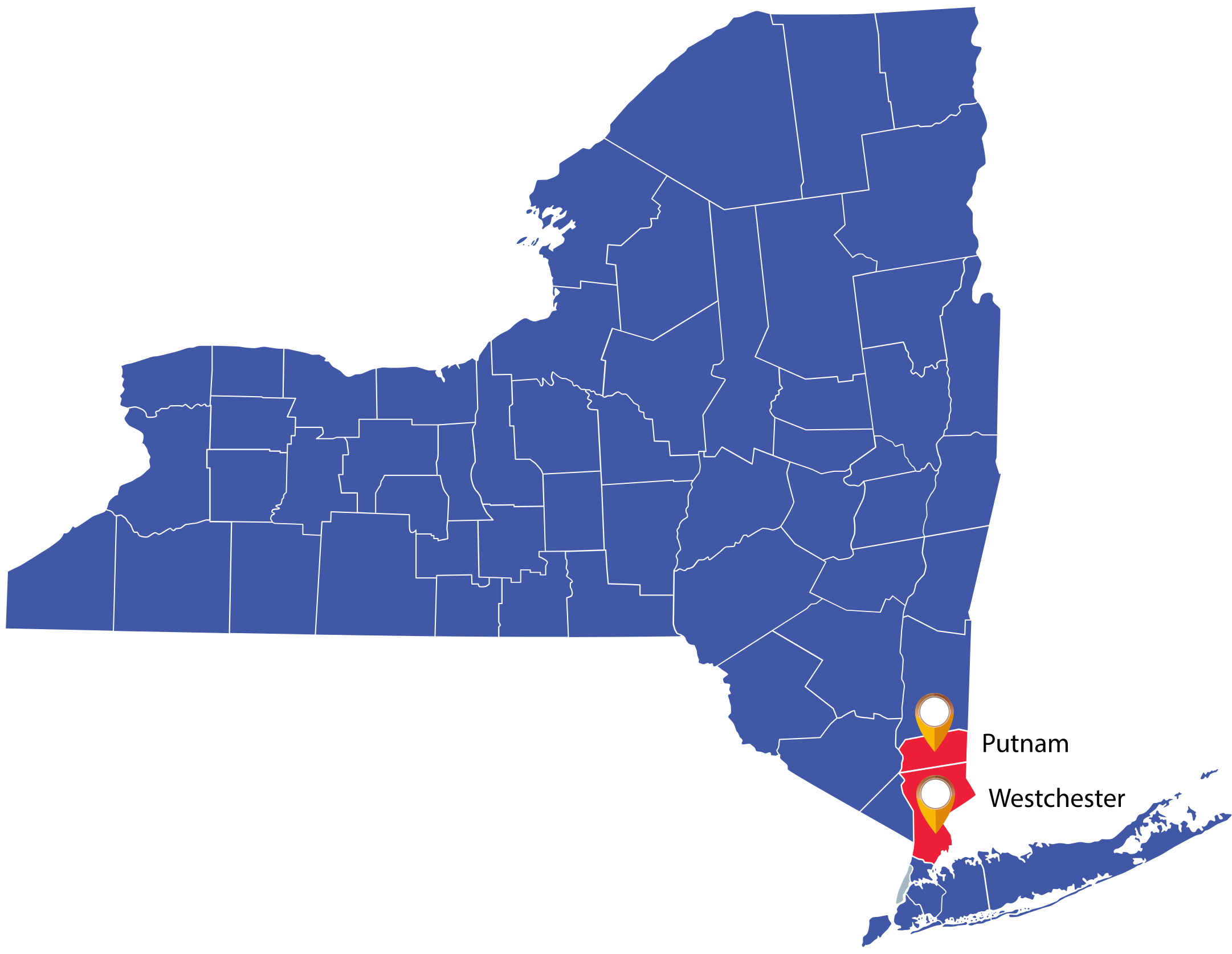
Bleakley Plumbing’s Route 202 office serves Bedford as part of its Northern Westchester coverage. The regional service mix includes private wells, pressure tanks, water treatment, storage, booster equipment, and house-side plumbing that commonly overlap on the same call.
Well-System Service Across Bedford And Nearby Towns
Bedford sits near Katonah, Bedford Hills, Pound Ridge, Mount Kisco, Armonk, Chappaqua, North Salem, and Somers, giving Bleakley practical access to well-dependent properties across the surrounding area.
- Bedford, Bedford Hills, Katonah, Pound Ridge, Mount Kisco, Armonk, Chappaqua, and neighboring Westchester communities
- Appointments for well pump diagnosis, deep-well pulling, pump replacement, pressure tanks, switches, and controls
- Support for storage tanks, booster systems, chlorination, testing, filtration, and water-line problems tied to the well
- Provide the street address, pressure pattern, pump behavior, and any known well depth so the office can match the call with current coverage
Eight Bedford Details That Matter Before A Well Pump Is Replaced
Two homes can show the same low-pressure symptom for completely different reasons. These details determine what should be tested, what equipment is appropriate, and how the work can be completed on the property.
Well Depth & Pump Setting
Depth, static water level, pumping level, drop-pipe length, and where the pump is set affect motor load, lifting requirements, and replacement selection.
Recovery And Peak Demand
A pump must work with the well’s ability to recover and the property’s highest realistic demand, not just the number printed on the old motor.
Pressure Tank Capacity
Tank volume and usable drawdown control cycle length. A small or waterlogged tank can wear out a pump that otherwise produces enough water.
Buried Line Length
Distance from the casing to the mechanical room adds friction, creates more possible leak points, and can make air-entry symptoms harder to locate.
Elevation To The House
A house above the well needs additional head pressure, while upper floors and distant fixtures may reveal a system that is marginal under load.
Treatment Restriction
Loaded cartridges, undersized filters, softeners in regeneration, neutralizer media, or partly closed bypass valves can imitate a weak well pump.
Wellhead Access
Grade, gates, landscaping, overhead branches, stonework, parked vehicles, and casing location determine whether pulling equipment can reach the site.
Power And Controls
Voltage, cable condition, control boxes, relays, capacitors, pressure switches, generator setup, and moisture exposure all influence reliable starts.
Well Pump Work Should Protect The Basement, Yard, And Water System
A pump pull connects outdoor work at the casing with indoor work at the tank, controls, filters, and main water line. The route for tools, old pipe, cable, discharge water, and replacement equipment should be considered before the system is opened.
Before equipment moves through the property, the crew can plan for clean uniforms, shoe covers, protected walking surfaces, and a defined job price. That preparation is useful when outside casing work connects to a tight stairway, finished lower level, or crowded utility area.
- Mark and clear the wellhead, then protect nearby plantings, stonework, driveway edges, and buried-utility areas used for access
- Create a clean working path to the pressure tank, switch, filters, shutoffs, electrical controls, and main distribution connection
- Manage pulled pipe, cable, sediment, old fittings, and flushing water so they do not damage lawns, floors, walls, or stored items
- Sanitize, flush, or sample the system when the repair scope or well disturbance calls for those steps
- Verify stable pressure, normal cycle length, leak-free connections, and clear flow before water-using appliances return to service
Well Pump Specialists Who Can Follow The Problem Into The House
A well complaint can begin below the casing and end at a clogged filter, failed tank, closed valve, or undersized branch. Bleakley’s pump, pressure, treatment, plumbing, and mechanical experience helps keep one connected water problem from being split into unrelated guesses.
Well-System Work Bleakley Coordinates
- Troubleshooting, repair, and replacement for submersible well pumps and related water-supply equipment
- Deep-well hoist capability for pump, drop-pipe, cable, and fitting work below the casing
- Pressure tanks, switches, gauges, storage tanks, booster pumps, check valves, and system controls
- Well chlorination, water testing coordination, sediment management, filtration, and treatment connections
- House-side valves, service piping, leak repairs, frozen-line concerns, and distribution problems after the tank
What Bedford Homeowners Should Get From The Visit
- Testing that supports the diagnosis before a pump is pulled or replacement equipment is selected
- A plain explanation of whether the fault is in the pump, tank, control, buried line, well recovery, or indoor equipment
- Pump and tank recommendations based on depth, pressure, drawdown, access, and actual property demand
- Care for the wellhead, landscaping, mechanical room, finished surfaces, flushing, and cleanup
- Reach the Bedford pump dispatcher by calling 914-276-3756 with the address and failure pattern
Bleakley Resources For Bedford Well Owners
Review the pump service, water-quality options, company information, nearby coverage, and scheduling pages that can help you describe the system and choose the next step.
Company And Scheduling
Well, Water And Pressure
Answers To Common Bedford Well Pump Questions
These answers cover no-water calls, low pressure, short cycling, deep-well pump replacement, filters, water testing, service preparation, and the point where continued repair stops being practical.
What well pump problems can Bleakley handle in Bedford?
Bleakley services private-well systems with no water, low or uneven pressure, sputtering, repeated cycling, continuous pump operation, control problems, tank failures, check-valve symptoms, storage or booster issues, and suspected pump failure. The diagnosis can extend from the wellhead and buried line to the pressure equipment, treatment train, and house piping.
Why can a Bedford home lose water even when the breaker is on?
A breaker can remain on while a pressure switch, control box, capacitor, relay, cable connection, motor, tank, check valve, or underground line fails. A clogged filter or closed valve can also stop usable flow after the pump has built pressure. Gauge readings and electrical testing help separate those possibilities.
What does rapid well-pump cycling usually mean?
Cycling every few seconds usually means the system has lost normal drawdown. A waterlogged pressure tank, failed bladder, incorrect air charge, damaged switch, leaking check valve, or undersized tank may be involved. Because short cycling adds frequent starts, it should be corrected before it overheats or wears the motor.
How can I tell whether low pressure comes from the pump or a filter?
Compare the gauge with pressure at an untreated hose connection or another point before the filtration equipment when that can be done safely. Normal tank pressure with weak downstream flow suggests a filter, treatment, valve, or house-piping restriction. Pressure that never builds properly keeps the pump, well yield, check valve, tank, and buried line higher on the list.
Should I shut off a pump that runs continuously without building pressure?
Yes, when a reachable disconnect or pump switch can be operated safely and the motor is running without gaining pressure, shutting it down can prevent additional damage. Do not touch wet controls or exposed wiring. Record the gauge reading, sounds, and any wet ground, then call for service rather than repeatedly restarting the system.
Can Bleakley replace a deep well pump?
Yes. Bleakley works on submersible and deep-well pump systems and has hoist-truck capability for pulling equipment from the casing. The replacement plan should account for depth, pump setting, available well yield, drop pipe, cable, pressure requirements, tank size, property demand, and physical access to the wellhead.
What information helps before a well-pump service visit?
Share whether the whole house is affected, the pressure-gauge reading, how often the pump starts, recent power or lightning events, water-quality changes, filter service, visible leaks, and any known well depth or pump age. Clear access to the wellhead, tank, switch, controls, filters, main valve, and electrical panel.
Does Westchester County require private well-water testing?
Westchester County has private-well testing requirements tied to certain property sales, rental situations, new wells, and wells returning to use after an extended period. A pump repair does not automatically satisfy those requirements. Use a qualified laboratory and confirm the current county rules for the specific property and transaction.
Does Bleakley serve Bedford Village, Bedford Hills, and Katonah?
Yes. Bleakley lists Bedford, Bedford Hills, Katonah, and nearby Northern Westchester communities within its service coverage. Availability can vary with the address, access, and urgency, so call the Somers office with the location and the well-system symptoms.
When is well-pump replacement more sensible than repair?
Replacement becomes more practical when testing confirms a failed or badly worn pump, the motor or cable is repeatedly faulting, output no longer matches the well and household demand, or pulling the pump to repair an aging assembly would leave other major components near failure. A sound pump should not be replaced for a tank, switch, filter, or line problem.
Need Well Pump Service In Bedford, NY?
Call Russell B. Bleakley Plumbing & Heating, Inc. when a Bedford private-well home has no water, weak pressure, rapid cycling, a pump that will not stop, tank or control trouble, air and sediment at the faucets, or a well-system replacement that needs a clear scope.