
Water Treatment For Well & Town/City Water Armonk, NY
Rust-colored staining, chalky scale, chlorine taste, sulfur odor, or grit in a glass can come from very different water conditions. Russell B. Bleakley Plumbing & Heating, Inc. helps Armonk property owners identify whether the source is a private well or a North Castle water district, review the test evidence, and build whole-house or drinking-water treatment around the actual problem instead of the symptom alone.
Who Handles Water Treatment For Private Wells And Town Water In Armonk, NY?
Call Bleakley when well water changes color or odor, town water tastes different than usual, fixtures stain, soap will not rinse clean, cartridges plug too quickly, or a current system no longer keeps up. The visit can cover testing, filters, softeners, neutralizers, ultraviolet units, reverse osmosis, well chlorination, pumps, pressure tanks, and the plumbing that connects everything.
A treatment unit should not be chosen from a countertop demonstration or appearance alone. Iron, manganese, hardness, low pH, sediment, chlorine, bacteria, lead, and regulated contaminants require different tests and different equipment. A basic field screening can guide the conversation, while health-related decisions may require a certified laboratory result or the current water-district report.
Water source changes the starting point in North Castle. Downtown Armonk, the former IBM area, and the Business Park are associated with Water District 4; Whippoorwill is Water District 5, Windmill Farm is Water District 2, and New King Street is Water District 8. Properties beyond those service areas may rely on private wells, where the owner is responsible for testing and treatment upkeep.
Start With What The Water Is Doing, Then Confirm What The Test Shows
Choose the closest symptom below, then note whether it affects hot and cold water, every fixture or one room, and water before or after the existing treatment equipment. Those details help separate a source-water issue from a heater, pipe, cartridge, valve, or fixture problem.
Rust-Colored Stains Or Metallic Taste
Orange residue can come from iron or manganese in the water, corrosion inside the building, or material released after plumbing work. Compare cold and hot water, note whether the stain appears throughout the property, and use testing to identify the metal and concentration before selecting media or a filter size.
- Photograph the stain before cleaning and note whether it appears on cold water, hot water, or both.
- Compare several fixtures and an existing untreated sample point only when one is already installed and safe to use.
- Gather recent filter dates, plumbing changes, laboratory results, and the correct North Castle district report before the visit.
Armonk Water Treatment Should Begin With The Source, The Symptom, And The Plumbing After The Meter Or Well
Town water and private well water are not diagnosed the same way. North Castle’s public districts sample and treat the supply before it reaches the property, while a private-well owner maintains the well, pump, pressure equipment, disinfection, and treatment. Inside either building, service lines, old valves, water heaters, and house piping can still change taste, color, or lead exposure at the tap.
Bleakley works from the source toward the fixtures: confirm the water supply, review a district report or laboratory result, inspect pressure and flow, identify existing equipment, and check where the complaint begins. That sequence helps determine whether the answer is maintenance, a better treatment order, a point-of-use system, or a broader plumbing correction.
- Confirm the exact source at the street address: private well, downtown district, Whippoorwill, Windmill Farm, New King Street, or another supply.
- Separate taste, odor, staining, and scale complaints from health-related concerns that require certified testing.
- Measure static pressure and peak flow before adding cartridges, media tanks, ultraviolet equipment, or reverse osmosis.
- Place sediment, oxidation, neutralization, softening, carbon, disinfection, and polishing stages in an order that supports each unit.
- Provide a bypass, sample points, drain route, shutoffs, and service clearance so the system can be maintained without shutting down the property unnecessarily.
Filtration, Softening, Neutralization, UV, And Drinking-Water Systems For Armonk Properties
The best treatment train removes the specific material present without starving the house of pressure or creating a maintenance burden. These options can be combined when testing shows more than one condition, but their order, flow rating, drain needs, and service clearances have to work together.
Water Testing And Problem Mapping
Screening, sample planning, and review of laboratory or district information to distinguish aesthetic complaints from conditions that call for certified contaminant testing.
Review Water TestingSediment And Turbidity Filtration
Whole-house cartridge, backwashing, or other particle-control options for sand, grit, cloudiness, pipe debris, and suspended material that reaches fixtures or protects downstream media.
Explore Sediment FiltrationIron And Manganese Treatment
Equipment selected for measurable iron or manganese conditions, with attention to oxidation, filtration rate, pH, staining level, backwash flow, and what the existing well or district supply can support.
See Iron Treatment OptionsAcid Neutralizers And Softening
Neutralization for acidic water and softening for calcium or magnesium hardness, sized so corrosion control, scale reduction, sodium exchange, and household demand are considered separately.
Compare Softening And NeutralizingUltraviolet And Well Sanitizing
Ultraviolet disinfection, well sanitizing or chlorination, and related plumbing support when testing or well work shows that microbial control and protected pretreatment are appropriate.
Review UV And Well SanitizingReverse Osmosis And Point-Of-Use Filtration
Under-sink or point-of-use filtration for drinking and cooking, including reverse osmosis where the target contaminant, certification, recovery rate, storage, and drain connection make it a suitable choice.
See Reverse Osmosis SystemsWater Changes That Tell You A Filter, Media Bed, Or Test May Be Due
Water-quality equipment rarely fails all at once. Returning stains, pressure loss, longer regeneration, changing odor, and shorter cartridge life can show that the water has changed, the media is exhausted, or a valve and bypass are no longer moving water correctly.
Orange Or Brown Marks Return
Staining that returns soon after cleaning can mean the treatment is undersized, the media is spent, the pH is outside its working range, or iron is coming from plumbing rather than the source.
White Scale Builds Quickly
Spots on glassware, crust around aerators, and scale on heating elements point toward hardness, but a hardness number and household demand are needed before a softener is sized.
Water Smells Different At One Tap
An odor at one sink may come from the drain, faucet aerator, or a local hot-water branch. An odor at every cold tap calls for a different test and a source-to-house comparison.
Flow Drops After Treatment
Weak showers after filters or treatment equipment can come from loaded media, a blocked cartridge, an incorrect bypass position, low backwash capacity, or equipment that was undersized for peak flow.
Cloudiness Appears After Rain
A private well that turns cloudy after heavy rain, flooding, excavation, or work at the wellhead deserves prompt testing. Appearance alone cannot show whether the concern is only sediment.
Filters Need Constant Changing
Cartridges that clog in days instead of months can indicate a new sediment load, pipe scale, iron breakthrough, a failing well component, or a filter that is doing a job better handled by backwashing pretreatment.
Which Water Problems Need A Prompt Response, And Which Are Better Planned?
Urgency depends on whether the change suggests contamination, active leakage, loss of pressure, or damage to the treatment system. Recurring scale, taste preferences, and equipment upgrades usually allow time for testing and a properly sized plan.
Respond Quickly When Water Changes Suddenly
- Water changes suddenly after flooding, heavy rain, excavation, well work, or damage to the well cap or service line.
- A chemical, fuel-like, sewage, or persistent rotten-egg odor affects cold water throughout the building and the source is unknown.
- A laboratory result reports bacteria or another contaminant above its applicable standard, or a required disinfection component is not operating.
- A filter housing, control valve, drain line, softener, ultraviolet chamber, or storage tank is leaking into the mechanical room.
- Dark particles, orange sludge, or sand appears abruptly and begins clogging fixtures, valves, appliances, or the water heater.
Plan Equipment Around Test Results And Demand
- Hardness leaves scale and soap residue, but the household can wait for a measured hardness result and accurate flow sizing.
- Iron or manganese staining is recurring while the current equipment still passes water and can be inspected before replacement.
- Town-water taste or chlorine odor is mainly a drinking-water preference and current district notices do not indicate an urgent condition.
- An older treatment train needs reorganizing, additional capacity, or easier maintenance before a renovation, new appliance, or occupancy change.
- A larger family, additional bathroom, pool house, irrigation use, or business demand will change the required service flow and regeneration schedule.
Four Decisions That Keep A Treatment System From Solving One Problem And Creating Another
A treatment system should be selected from the source and target, not from the most visible tank. The useful design questions are what must be removed, how much water the building uses at once, what pressure is available, where wastewater can discharge, and how each stage will be serviced.
Source Water And Verified Test Results
The starting evidence may be a private-well laboratory report, a current North Castle water-district report, a plumbing inspection, or a specific tap sample. Each tells a different part of the story and helps prevent treatment for the wrong condition.
Pretreatment And Particle Control
Sediment control protects valves, softeners, carbon, ultraviolet chambers, reverse-osmosis membranes, water heaters, and fixtures. The particle size and load determine whether a disposable cartridge or self-cleaning approach is practical.
Primary Treatment And Disinfection
Iron removal, neutralization, softening, carbon, ultraviolet treatment, or another primary step must be placed where its chemistry and flow requirements are supported. One unit does not substitute for all the others.
Final Filtration, Storage, And Fixtures
Polishing filters, drinking-water systems, storage tanks, pressure regulators, and the fixtures themselves finish the path. The final result should be checked at representative taps, not only beside the equipment.
An Armonk Water-Treatment Visit Built Around Testing, Flow, And Service Access
The goal is to connect the complaint to a testable cause, then choose equipment that performs at real household flow. A clean installation also needs a workable bypass, drain route, power source where required, and enough room for future filter or media service.
Identify The Source And Complaint
The first conversation covers the address, water district or well, when the condition began, whether hot and cold water differ, existing treatment, recent plumbing or well work, and any report or laboratory result already available.
Sample, Inspect, And Measure Flow
The technician checks pressure and flow before and after existing equipment, looks for bypass or valve problems, reviews service dates, and identifies safe sampling points. Certified testing is recommended when the decision involves bacteria, lead, PFAS, or another regulated contaminant.
Match Equipment To The Water
Equipment is matched to the measured condition, peak demand, available pressure, backwash rate, plumbing material, water heater, drain access, and maintenance expectations. The proposal should distinguish required treatment from optional taste or convenience upgrades.
Install, Flush, And Establish Maintenance
After approved work, the system is flushed and placed into service according to the equipment requirements. Flow, leaks, bypass operation, drain discharge, and representative fixtures are checked, then filter, lamp, salt, or media intervals are explained.
Town District Water And Private Wells Can Need Different Treatment At The Same Armonk Address
Armonk is not served by one uniform water source. Downtown and Business Park properties can be in Water District 4, Whippoorwill is listed under Water District 5, Windmill Farm under District 2, and New King Street under District 8. Other North Castle addresses may use private wells, so the street address matters before any treatment recommendation.
Property layout matters too. Homes and businesses along Bedford Road and Route 22, Main Street and Route 128, King Street and Route 120, Whippoorwill Road, and the larger wooded lots around town can have long service runs, finished lower levels, irrigation demand, compact mechanical rooms, or private-well equipment that changes the available flow and installation route.
- Check the street address against North Castle’s district map before assuming the property uses private well water.
- Private-well owners should keep laboratory reports, well-service records, pump information, and treatment maintenance dates together.
- Long fixture runs and large houses can reveal pressure loss that a small countertop flow test will miss.
- Municipal treatment for iron or manganese does not rule out house-side corrosion, aging piping, or a water-heater source.
- Winter road salt, seasonal groundwater changes, and irrigation demand should be evaluated with testing rather than assumed from location alone.
Water-Treatment Service For Armonk From Bleakley’s Somers Office
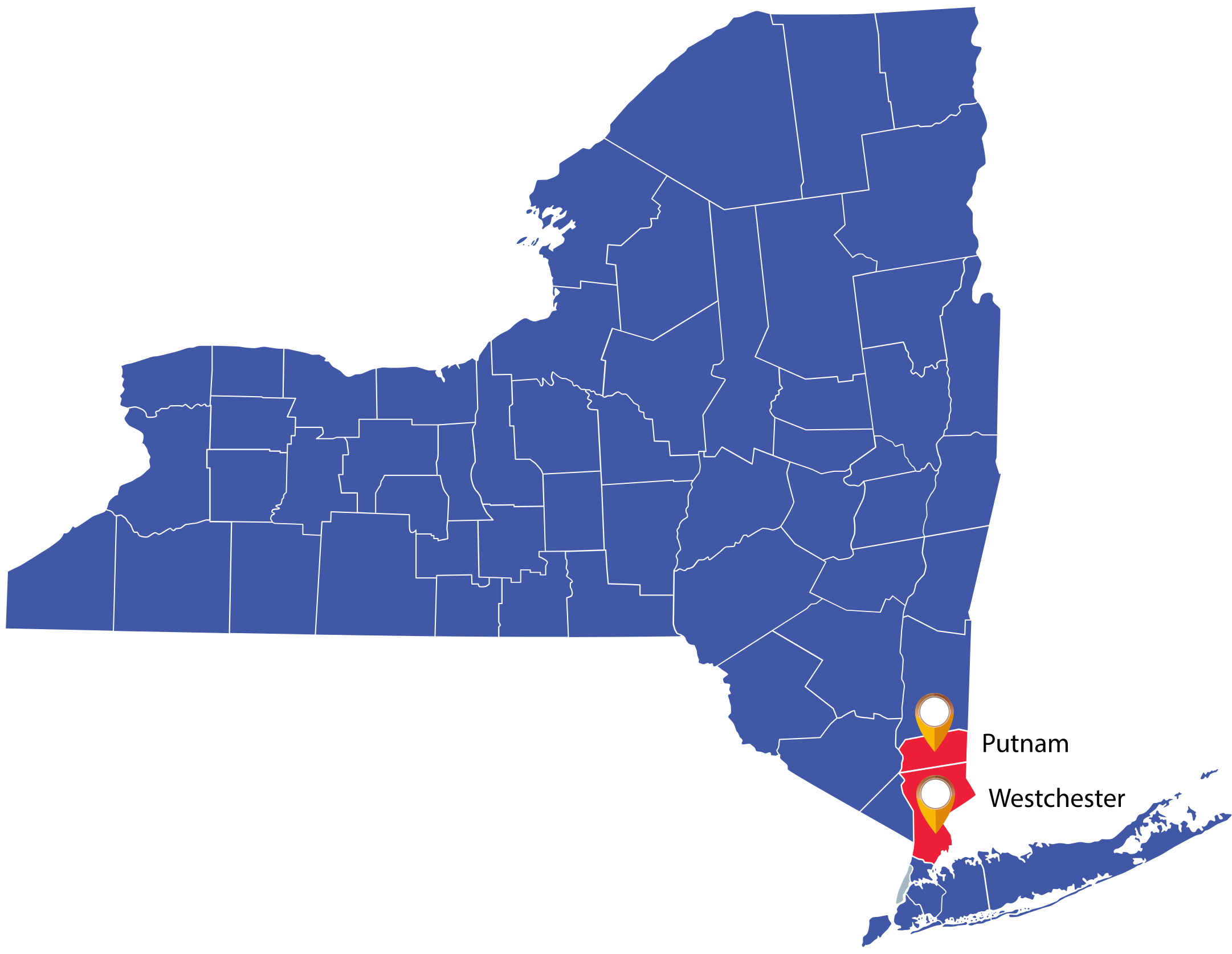
Bleakley’s Somers office serves Armonk as part of its Westchester coverage. Water-treatment calls often overlap with well pumps, pressure tanks, water heaters, shutoff valves, recirculation, and house piping, so the source and the building can be evaluated as one connected system.
Serving Armonk, North Castle, And Nearby Westchester Water Systems
Armonk is close to North White Plains, Chappaqua, Mount Kisco, Bedford, Purchase, Pleasantville, and other Westchester communities where public water districts and private wells can exist within the same regional service area.
- Armonk, North Castle, North White Plains, Chappaqua, Mount Kisco, Bedford, Purchase, Pleasantville, and nearby Westchester communities.
- Appointments for water testing review, sediment control, iron treatment, softening, neutralization, ultraviolet systems, and reverse osmosis.
- Connected support for well pumps, pressure tanks, storage, water heaters, valves, and house piping that can affect treatment performance.
- Provide the property address, water source, complaint, recent report or laboratory result, and existing equipment list when scheduling.
Eight Property Details That Determine The Right Treatment Train
Two neighboring properties can need completely different equipment even when both owners describe the water as ‘bad.’ These eight details determine what should be tested, how a system is sized, and whether the building can support the required flow, drainage, and maintenance.
Private Well Or Water District
A private well places testing, pump performance, pressure, and treatment under the owner’s control. A district-water property starts with the current public report and then separates distribution conditions from service-line and house-side plumbing.
Laboratory Result And Treatment Goal
The treatment goal should name a measured condition and an acceptable endpoint. A hardness complaint, iron result, pH reading, bacteria test, lead concern, or PFAS result cannot be handled by interchangeable equipment.
Peak Flow And Fixture Count
Large tubs, multiple showers, irrigation, commercial fixtures, and simultaneous morning use establish the gallons per minute a whole-house system must pass without a noticeable pressure drop.
Well Pump And Pressure Tank
On a well, the pump, tank, switch settings, recovery, and backwash demand must support the treatment equipment. A filter cannot work correctly if the source cannot deliver its required cleaning flow.
Plumbing Material And Water Age
Copper, brass, galvanized steel, plastic, service-line materials, and water that sits in long branches can affect metals, taste, and first-draw samples after the water has already left the source.
Drain, Backwash, And Electrical Access
Backwashing filters and softeners need an approved drain route, while ultraviolet and powered controls need dependable electrical service. Tight utility rooms may require a different equipment layout.
Water Heater And Appliance Load
Hardness, sediment, acidity, and iron can affect tanks, tankless heat exchangers, boilers, humidifiers, ice makers, and laundry equipment. Treatment should account for what the water reaches downstream.
Service Space And Media Changes
Canisters, UV sleeves, salt tanks, control heads, sampling valves, and media tanks need room to open, lift, sanitize, and replace. Equipment that cannot be serviced is not a practical installation.
Water-Treatment Equipment Should Protect Pressure, Appliances, And The Mechanical Room
A whole-house system changes the plumbing path and may introduce backwash discharge, electrical components, storage, or tall media tanks. The work should preserve pressure, keep shutoffs and the main accessible, and protect finished floors and nearby mechanical equipment.
Before installation, the route for tanks and tools can be planned around stairs, doors, finished lower levels, and tight utility spaces. A labeled bypass, isolation valves, sampling points, protected drain connection, and clear maintenance access make future service faster and less disruptive.
- Protect floors, stairs, doorways, finished walls, stored belongings, and neighboring mechanical equipment before tanks or media are moved.
- Install accessible isolation valves, a clearly marked bypass, and sample points that allow untreated and treated water to be compared.
- Route regeneration and backwash discharge so it can handle the expected volume without flooding, cross-connection, or damage to a finished area.
- Keep ultraviolet controls, pumps, transformers, outlets, and wiring dry, visible, and reachable for inspection and lamp service.
- Label cartridge sizes, media types, salt use, lamp dates, sanitizing steps, and the next maintenance interval at handoff.
One Plumbing Team For The Source, Pump, Filters, Water Heater, And Fixtures
Water treatment often sits between the source and every plumbing fixture. Bleakley’s experience with wells, pumps, pressure tanks, water heaters, valves, and treatment equipment helps identify whether the complaint begins in the water, the treatment train, or the building after it.
Water Systems Bleakley Can Coordinate
- Testing-led treatment for private wells and North Castle district water, with the water source confirmed before equipment is selected.
- Sediment, turbidity, iron, manganese, pH, hardness, taste, odor, and drinking-water concerns evaluated as separate treatment goals.
- Softeners, neutralizers, carbon, backwashing filters, ultraviolet systems, reverse osmosis, and well chlorination connected to the plumbing correctly.
- Well pumps, pressure tanks, storage, boosters, shutoffs, and flow limitations considered when treatment equipment needs backwash or steady pressure.
- Water heaters, boilers, fixtures, ice makers, laundry, and house piping checked when the complaint may begin after the source or treatment train.
What Armonk Owners Should Receive
- A plain explanation of what the test shows, what the proposed equipment targets, and what it will not remove.
- Sizing based on peak flow, pressure, water chemistry, regeneration demand, plumbing layout, and realistic maintenance access.
- A distinction between immediate safety steps, required treatment, house-side repair, and optional taste or convenience improvements.
- A clean installation with protected finishes, accessible valves, a working bypass, controlled drain discharge, flushing, and startup checks.
- Direct scheduling through the Somers office at 914-276-3756 with the Armonk address and water-source details.
Bleakley Resources For Testing, Treatment, Pumps, And Plumbing
Use these links to review Bleakley’s treatment capabilities, prepare a well or pressure-system question, see nearby service coverage, and send the address, water source, symptoms, and test information needed to schedule the right visit.
Company, Reviews, And Scheduling
Water Quality, Pumps, And Plumbing
Answers To Common Armonk Water-Treatment Questions
These answers explain how source type, testing, equipment certification, flow, maintenance, and local water districts affect treatment decisions for Armonk homes and businesses.
Can Bleakley treat both private well water and town water in Armonk?
Yes. Bleakley works with private-well systems and properties supplied by North Castle water districts. The first steps differ: a well owner may need source testing and pump or pressure review, while a town-water customer should start with the correct district report and then evaluate the service line, house plumbing, and any desired point-of-entry or drinking-water treatment.
Do I need a laboratory test before choosing water-treatment equipment?
A certified laboratory test is the right basis when the concern involves bacteria, lead, PFAS, arsenic, uranium, nitrates, or another regulated contaminant. Field screening can be useful for conditions such as hardness, pH, iron, or chlorine, but the test method must match the decision. Treatment should be selected after the result identifies both the contaminant and its concentration.
Why does Armonk town water sometimes smell like chlorine?
North Castle’s public supplies use disinfection, and a chlorine smell can be noticeable at times without automatically meaning the water is unsafe. Compare several cold taps, review current district notices, and contact the Water Department when the change is sudden or widespread. Carbon treatment may improve taste or odor, but it must be sized and maintained correctly.
What causes orange stains in sinks, tubs, or laundry?
Orange or brown stains commonly involve iron or manganese, but corrosion from service lines, a water heater, or household piping can look similar. Testing cold water at the right location helps identify whether the metal is arriving from the source or being introduced after the water enters the building.
Will a water softener remove iron, sediment, bacteria, or PFAS?
No. A softener primarily exchanges hardness minerals and may handle limited forms of iron under the right conditions. It is not a sediment filter, disinfectant, or universal contaminant-removal device. Bacteria, PFAS, lead, and other specific concerns require testing and treatment certified or designed for that target.
What is the difference between whole-house treatment and reverse osmosis at one sink?
Whole-house treatment is installed near the water entry so it can protect plumbing, appliances, and most fixtures. Reverse osmosis at one sink treats a smaller volume for drinking and cooking and usually includes its own membrane, storage, faucet, and drain connection. The right choice depends on what needs treatment and where the treated water is needed.
Can treatment equipment reduce water pressure?
Yes. A loaded cartridge, fouled media bed, undersized valve, incorrect pipe size, low well pressure, or a unit without enough service flow can weaken showers and simultaneous fixtures. Pressure and gallons per minute should be measured before installation and checked across the system after startup.
How often should filters, UV lamps, or treatment media be serviced?
Intervals depend on water use, contaminant load, equipment design, and manufacturer instructions. Cartridges may need changing when pressure drops or on a scheduled interval; ultraviolet lamps are commonly replaced on a time schedule even when they still glow; softener salt, neutralizer media, carbon, iron media, and RO filters each have different service needs.
What should I do when water changes after heavy rain or well work?
When a private well changes after flooding, heavy rain, excavation, pump work, or a disturbed well cap, avoid assuming a filter will solve it. Limit drinking use when contamination is suspected, arrange the appropriate laboratory testing, and inspect the well and treatment system. For town water, check whether neighbors are affected and review current district notices before altering equipment.
Does Bleakley serve Windmill Farms, Whippoorwill, downtown Armonk, and New King Street?
Bleakley serves Armonk and surrounding North Castle areas, including addresses around Windmill Farms, Whippoorwill, downtown Armonk, the Business Park, and New King Street, subject to current scheduling. Call with the street address and whether the property uses a private well or a town district so the office can prepare the correct service path.
Need Better Water For Armonk, NY?
Call Russell B. Bleakley Plumbing & Heating, Inc. when Armonk water leaves stains, scale, grit, odor, an unusual taste, or a test result that needs a practical treatment plan. Bring the address, water source, recent report or laboratory result, and details about the existing equipment so the next step starts with evidence.