Well Pump Services Brewster, NY
When faucets quit across the house, air bursts from the lines, shower pressure falls, or the pump keeps running, the cause may sit at the wellhead, underground, or beside the pressure tank. Russell B. Bleakley Plumbing & Heating, Inc. evaluates Brewster-area systems from the submersible pump and service line through the switch, tank, controls, treatment equipment, and indoor piping, then recommends the repair or replacement supported by the test results.
Who Services Well Pumps And Pressure Equipment Around Brewster, NY?
Call Bleakley Plumbing when a Brewster-area private well stops supplying water, pressure surges and drops, the pump starts repeatedly, or the system cannot reach its normal shutoff setting. The visit can cover the pump, tank, switch, control box, check valve, storage equipment, booster components, and the plumbing that delivers water indoors reliably.
No water at the sink does not prove the pump is dead. A failed switch, tripped control, waterlogged tank, leaking check valve, damaged buried line, blocked treatment unit, or loose electrical connection can produce nearly the same symptom. Checking those components first can prevent an unnecessary pump pull.
A Brewster mailing address may be inside the Village of Brewster or elsewhere in the Town of Southeast. The area includes public water districts as well as private wells, so identifying the property’s actual water source is the first step before diagnosing a pump complaint at that address.
How Well Pump Trouble Shows Up Before The Water Stops Completely
Select the closest symptom below. Notice whether every fixture is affected, how the pressure gauge responds, which noises come from the tank or controls, and whether the change followed a storm, outage, filter change, excavation, or heavy water demand.
No Water Throughout The Home
Verify that hot and cold fixtures have stopped throughout the property. A complete outage may trace to the pump, electrical supply, control box, pressure switch, tank, buried well line, or a blockage immediately beyond the pressure equipment.
- Check the electrical panel one time and record whether the pump breaker opened; never keep resetting a breaker that trips again immediately.
- Read the pressure gauge without removing electrical covers, and note whether it stays at zero, holds some pressure, or changes when water is opened.
- Report recent lightning, generator operation, excavation, treatment service, unusual pump sounds, or wet ground that recently appeared anywhere between the casing and house.
The Pump Is Only One Piece Of A Brewster Well System
Groundwater must move through the pump, drop pipe, check valve, underground service line, pressure controls, tank, treatment equipment, and the home’s distribution piping before it reaches a faucet. A failure at any point in that chain can appear to be a pump problem from upstairs fixtures.
Bleakley Plumbing follows the full water path rather than assuming replacement at the start. The actual repair may involve pump controls, a leaking underground connection, worn submersible equipment, a failed pressure tank, storage or booster components, well chlorination, water-quality testing, or a restriction after water enters the building under demand.
- Determine whether flow reaches every cold-water fixture or stops at one branch, appliance, filter, or treatment loop
- Observe cut-in and cut-out pressure to confirm whether the switch, tank, and pump work together through a normal operating cycle
- Inspect the pressure tank for lost precharge, waterlogging, bladder failure, corrosion, or an insufficient usable drawdown volume
- Test treatment bypasses carefully when loaded cartridges, mineral media, or control valves may be choking household flow
- Follow the well line, check valve, controls, and reachable wellhead before approving any pump pull
Repair, Replacement, Pressure Control, And Water Treatment For Brewster Properties
Dependable well water requires more than motor size. These services address the equipment that builds pressure, limits cycling, carries water across the lot, and keeps the supply usable after it reaches the house.
Well Pump Troubleshooting
Checks for no water, weak recovery, intermittent output, rough starts, control failures, loss of prime, and pumps that never reach cutoff pressure.
See Pump TroubleshootingDeep-Well Pump Replacement
Planning and removal for submersible equipment, including casing access, pump depth, drop pipe, electrical cable, fittings, and proper replacement sizing.
Review Pump ReplacementPressure Tanks & Controls
Diagnosis of waterlogged tanks, failed bladders, incorrect precharge, worn pressure switches, inaccurate gauges, relief components, and damaging short cycles.
Check Pressure EquipmentUnderground Well Service-Line Testing
Investigation of unexplained pressure loss, air intrusion, wet soil, check-valve behavior, or damaged piping between the well casing and mechanical room.
Explore Well-Line ServiceStorage & Constant Pressure
System sizing for storage tanks, booster pumps, constant-pressure controls, household irrigation demand, accessory buildings, upper levels, and long water-delivery distances.
View Pressure And StorageChlorination & Treatment Support
Coordination for flushing, well disinfection, sediment filtration, iron treatment, acid neutralization, ultraviolet systems, and related water-quality equipment.
Review Treatment OptionsChanges Brewster Well Owners Should Notice Before Complete Failure
Private-well failures often send brief warnings before water service stops completely. Write down when the symptom occurs while the system still operates, because timing often helps separate pump, tank, switch, buried-line, recovery, and treatment problems.
Several Faucets Release Air
Sputtering at multiple fixtures may point to low well recovery, a leaking service line, a failed check valve, or air entering while the pump actively operates.
The Gauge Moves Too Quickly
A gauge racing between start and stop settings every few seconds commonly indicates lost tank drawdown, switch trouble, or a pressure tank that no longer absorbs household demand.
Minor Water Use Starts The Pump
A pump that starts whenever a toilet refills or a tap opens briefly is being over-cycled and needs the tank and controls checked together promptly.
Flow Begins Strong And Drops
Strong initial pressure followed by a fast decline can involve weak pump output, slow well recovery, clogged treatment equipment, a restricted valve, or demand that exceeds system capacity.
The Pump Breaker Keeps Opening
Repeated breaker trips can involve the motor, cable, controls, moisture, or unstable incoming voltage. Continued resets may worsen the failure and create an unnecessary safety risk.
Sediment Suddenly Reaches Fixtures
Unexpected grit, discoloration, or cloudiness can follow pump movement, well disturbance, line damage, heavy runoff near the casing, damaged drop pipe, or failed treatment equipment indoors.
When A Brewster Well-System Problem Deserves A Prompt Call
Complete water loss, an overheated motor, electrical faults, leaking pressure equipment, or damage at the wellhead should be handled quickly. Gradual pressure decline, short cycling, and capacity upgrades can usually be investigated before the system reaches total failure.
Call Promptly When Water Supply Is Unstable
- No cold-water fixture operates and the pressure gauge remains at zero or never starts to recover
- The pump runs continuously, sounds labored, becomes hot, or cannot build enough pressure to shut off
- The breaker, control box, or pressure switch trips again after one reset, or electrical parts are wet
- The pressure tank leaks, a fitting separates, or saturated ground appears along the buried service line between well and house
- Flooding, vehicle contact, digging, or storm debris has disturbed the well cap, casing, cable, or surrounding grade
Plan Improvements Before The Existing System Fails
- Water still reaches the house, but small draws cause rapid cycles and the pressure tank is near its expected replacement age
- Second-floor showers, irrigation zones, or simultaneous fixtures regularly exceed the available pressure and volume
- A generator plan must account for pump startup demand, control equipment, transfer operation, and safe electrical capacity
- A pool, barn, apartment, irrigation expansion, or growing household demand will increase required peak flow and storage requirements
- New filters, storage, or booster equipment should be sized with the pump instead of becoming an added downstream restriction
Four Connected Well Components That Determine Household Pressure And Long-Term Reliability
The faucet is only the final outlet in a connected system. A useful diagnosis works from well depth and pump output through the wellhead, buried piping, controls, tank, treatment equipment, and indoor distribution lines.
Submersible Pump & Drop Pipe
Pump wear, depth, horsepower, drop-pipe condition, cable integrity, and available well yield determine whether water reaches the surface reliably.
Wellhead, Valve & Service Line
A leaking valve, split underground line, failed fitting, loose cap, or compromised casing connection can lose pressure or admit air before water enters the building’s plumbing.
Pressure Tank & Control Switch
The switch starts and stops the motor while the tank supplies normal usable drawdown. Poor settings or waterlogging can quickly force a sound pump into repeated destructive cycling.
Treatment, Storage & Piping
Cartridges, softeners, neutralizers, storage tanks, boosters, partly closed valves, and restricted branches can reduce fixture pressure even when the well pump operates normally.
A Well Pump Visit That Diagnoses Before Equipment Is Pulled
The objective is to accurately distinguish pump failure from tank, control, power, buried-line, treatment, or recovery problems, then restore dependable water with work aimed squarely at the confirmed cause.
Document The Failure Pattern
The technician begins with affected fixtures, timing, pressure changes, pump-start frequency, recent outages or storms, water-quality changes, treatment service, and any known well records for the property.
Check Pressure And Electrical Controls
Available voltage, control operation, switch response, gauge movement, tank condition, valves, and treatment restrictions are checked before deciding whether underground equipment must come out.
Evaluate The Well Side
When testing points below grade, attention turns to the wellhead, service line, check valve, pump output, cable, drop pipe, setting depth, physical access, and likely recovery conditions.
Repair, Restore And Verify
After authorized work, the system is pressurized, watched through full cycles, checked for leaks and steady shutoff, flushed carefully when appropriate, and verified at multiple household fixtures.
Water Source, Long Runs, Slopes, And Wooded Access Change The Pump Job
Brewster can mean the compact Village of Brewster or a broader mailing area across the Town of Southeast. Some addresses are served by village or town water systems, while private-well properties are more likely beyond district boundaries on larger lots, where the casing may sit well away from the basement equipment.
Access differs around Routes 6, 22, 202, and 312, as well as the wooded roads between Brewster, Brewster Hill, Peach Lake, and nearby rural areas. Pump pulling may sometimes require planning around steep grades, retaining walls, mature trees, gates, narrow drives, buried utilities, and safe hoist-truck positioning during winter conditions.
- Keep the well cap visible and accessible instead of hiding it beneath shrubs, stored materials, pavement, or temporary structures
- Long service lines can conceal leaks and add friction, so excessive pump runtime should be investigated beyond the mechanical room
- Elevation between the casing and house increases the pressure required before water can reach distant or upper-level fixtures
- Irrigation, pools, accessory buildings, treatment cycles, and households can create peak demand beyond ordinary indoor use
- Winter outages, falling branches, ice, and narrow access can affect the failure pattern and equipment needed to complete a safe pump pull
Brewster Well Pump Help From Bleakley’s Somers Office
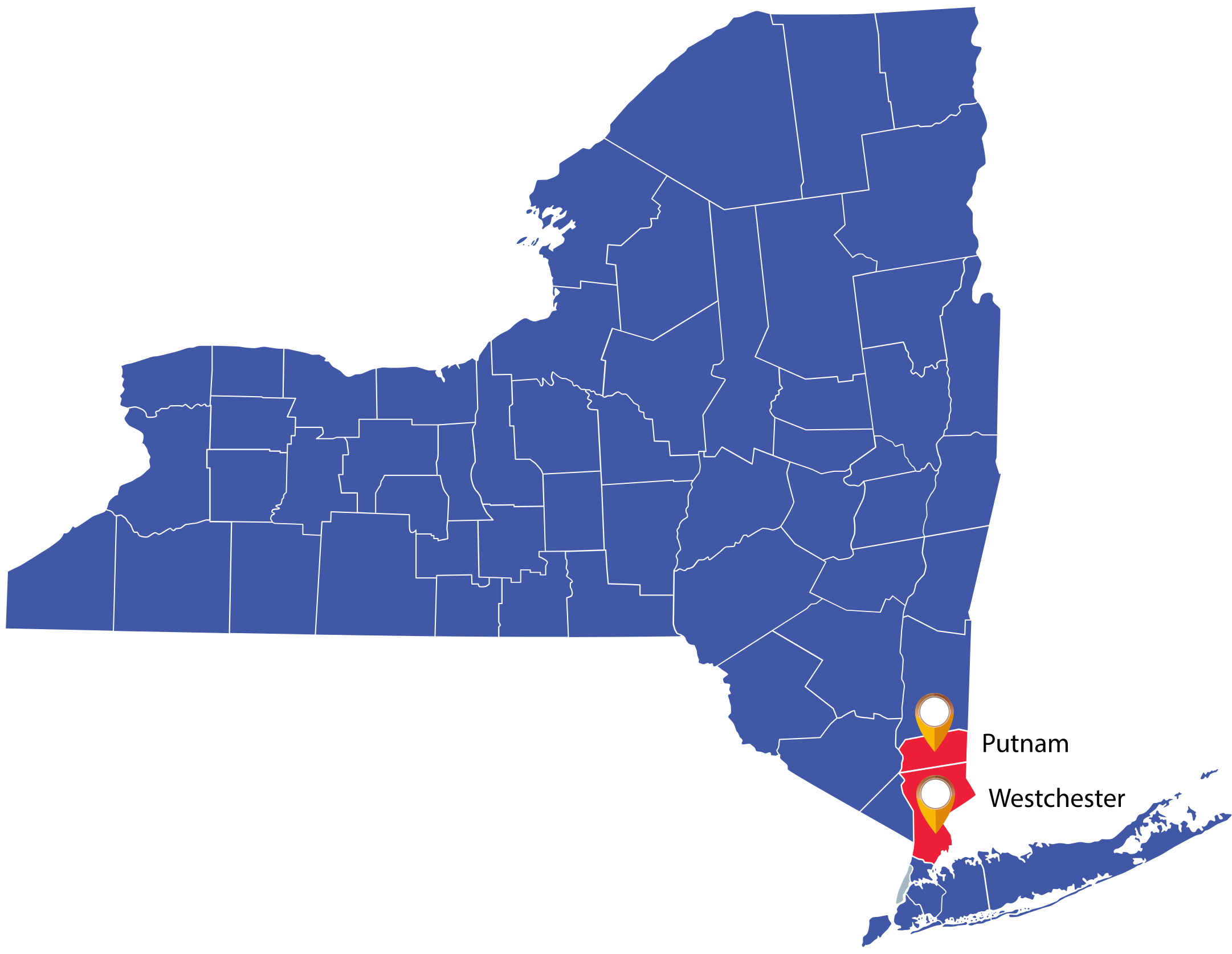
Bleakley Plumbing serves Brewster through its Putnam County and Northern Westchester coverage. A single call may involve the well pump, pressure tank, treatment equipment, storage, booster controls, buried piping, and indoor plumbing behind the same underlying water-supply complaint.
Well-System Service Across Brewster And Nearby Communities
Brewster sits near Brewster Hill, Southeast, Carmel, Patterson, Peach Lake, Putnam Lake, Croton Falls, North Salem, and Somers, giving Bleakley access to private-well properties throughout nearby communities.
- Brewster, Brewster Hill, Southeast, Carmel, Patterson, Peach Lake, Putnam Lake, and nearby Putnam communities
- Appointments for pump troubleshooting, deep-well pulling, replacement, pressure tanks, switches, check valves, and controls
- Support for storage tanks, constant-pressure systems, chlorination, filtration, testing, and buried-line problems connected to the well
- Share the service address, water source, gauge behavior, pump symptoms, and any known depth so coverage can be confirmed accurately for that address
Eight Brewster Property Details To Check Before Replacing A Well Pump
Two properties can have identical low-pressure complaints for completely different reasons. These factors determine the testing sequence, equipment selection, and whether the fix is at the pump, tank, controls, line, or treatment system.
Pump Depth & Setting Level
Static water level, pumping level, total depth, pump setting, and drop-pipe length affect motor load, lifting requirements, cable needs, and replacement selection.
Well Recovery & Peak Demand
The pump must match the well’s recovery rate and the property’s highest realistic demand, including simultaneous fixtures, irrigation, treatment backwash, and other seasonal outdoor use.
Pressure-Tank Drawdown Capacity
Tank volume and usable drawdown determine cycle length. A small or waterlogged tank can overwork a pump that otherwise supplies enough water reliably.
Underground Service-Line Distance
Long piping between the casing and mechanical room adds friction, creates additional leak points, and can make air-entry symptoms difficult to isolate accurately.
Well Elevation To House
A house above the well requires extra head pressure, while upper floors, long runs, and distant fixtures can reveal marginal performance under heavy demand.
Treatment Bottlenecks
Loaded cartridges, undersized filters, regenerating softeners, neutralizer media, or partly closed bypass valves can closely imitate weak well-pump output indoors.
Wellhead Access
Grade, gates, landscaping, branches, retaining walls, vehicles, and casing location determine whether pulling equipment can safely reach the wellhead.
Pump Power & Controls
Voltage, cable condition, control boxes, relays, capacitors, pressure switches, generator setup, and moisture exposure influence dependable pump starts.
Pump Work Should Protect The Wellhead, Yard, And Home Water System
A deep-well repair links outdoor work at the casing with indoor work around the pressure tank, controls, treatment equipment, and main water line. Tool access, removed pipe, cable, discharge water, and replacement components should be planned before the system is opened.
Before equipment crosses the site, the crew can establish a clean route, protect finished surfaces, and explain the approved scope. That matters when outside casing work connects to a narrow stairway, finished lower level, landscaped yard, or crowded mechanical space inside the home.
- Locate and clear the casing, then protect landscaping, retaining walls, driveway edges, and utility areas used for access
- Create an unobstructed path to the pressure tank, switch, filters, shutoffs, electrical controls, and main house water connection
- Handle removed pipe, cable, sediment, old fittings, and flushing water carefully so lawns, floors, walls, landscaping, and stored belongings remain protected
- Disinfect, flush, or arrange sampling when pump work, flooding, wellhead damage, or disturbance makes those steps appropriate
- Confirm stable pressure, normal cycle time, dry connections, and clear flow before water-using equipment returns to service
Well Pump Specialists Who Diagnose From The Casing To The Fixtures
A well-water complaint may begin below grade and end at a loaded filter, failed tank, closed valve, or restricted branch. Bleakley’s experience with pumps, pressure equipment, treatment, plumbing, and mechanical systems keeps one connected failure from becoming several costly disconnected guesses.
Well-System Work Bleakley Handles
- Diagnosis, repair, and replacement for submersible well pumps and related private-water equipment
- Specialized deep-well hoist capability for pumps, drop pipe, cable, fittings, and below-casing work
- Pressure tanks, switches, gauges, storage tanks, booster pumps, check valves, and control equipment
- Well chlorination, testing coordination, sediment management, filtration, sampling, and treatment connections
- House-side valves, service piping, frozen-line concerns, leak repairs, and distribution problems beyond the tank
What Brewster Homeowners Should Receive From The Visit
- Testing that supports the diagnosis before the pump is pulled or replacement equipment is selected
- A clear explanation of whether the fault involves the pump, tank, controls, buried line, well recovery, or other indoor equipment
- Pump and tank recommendations based on depth, pressure, drawdown, access, and actual property demand
- Care for the casing, landscaping, mechanical room, finished surfaces, flushing, and cleanup
- Direct scheduling through 914-276-3756 with the Brewster service address and the observed failure pattern
Bleakley Resources For Brewster Well Owners
Use these pump, treatment, company, coverage, and scheduling pages to identify the system correctly, describe symptoms clearly, and choose the next practical step without guessing.
Company, Crew & Scheduling
Pumps, Pressure & Water Quality
Coverage And Larger Projects
Practical Answers To Brewster Well Pump Questions
These answers cover water-source identification, no-water calls, low pressure, short cycling, deep-well replacement, treatment restrictions, Putnam County requirements, service preparation, and when repair stops making sense.
What well pump problems can Bleakley handle around Brewster?
Bleakley evaluates private-well systems with no water, uneven pressure, sputtering, rapid cycling, continuous operation, control faults, pressure-tank failures, check-valve symptoms, storage or booster problems, buried-line concerns, and suspected pump failure. Testing can follow the supply from the wellhead and submersible equipment through the pressure controls, treatment train, and indoor piping.
Why can Brewster well-supplied homes lose water even when the breaker remains on?
A breaker can remain set while the pressure switch, control box, capacitor, relay, cable connection, motor, tank, check valve, or underground line has failed. A blocked filter or closed valve may also stop usable flow after the pump builds pressure. Gauge readings and electrical testing clearly separate those possibilities.
What causes rapid well-pump cycling around Brewster?
Cycling every few seconds generally means the system has lost normal stored drawdown. A waterlogged tank, failed bladder, wrong precharge, worn switch, leaking check valve, hidden demand, or undersized tank may be responsible. Because repeated starts damage motors, short cycling should be corrected before the pump overheats or fails.
How can Brewster homeowners safely separate low well pressure from a clogged treatment filter?
Compare gauge pressure with flow at a safe connection before the treatment equipment whenever possible. Normal tank pressure with weak downstream flow points toward loaded cartridges, treatment valves, mineral media, a restricted bypass, closed isolation valves, or house piping. Pressure that never builds properly keeps the pump, well recovery, check valve, tank, buried line, and controls under investigation.
Should I shut off a pump that runs continuously without building pressure?
Yes, when a dry, labeled disconnect can be reached safely and the pump runs without gaining pressure, shutting it down can limit damage. Do not touch wet controls, scorched components, exposed wiring, or standing water near electrical equipment. Record the gauge reading, sounds, and wet areas, then request service instead of repeatedly restarting it.
Can Bleakley replace a Brewster deep-well pump?
Yes. Bleakley services submersible and deep-well systems and lists hoist-truck capability for pulling equipment from the casing. Replacement planning should account for depth, pump setting, motor horsepower, available yield, well recovery, drop pipe, cable, pressure requirements, tank drawdown, property demand, and safe access to the wellhead.
What information helps before a Brewster pump-service visit?
Share the exact address, whether the property uses district water or a private well, which fixtures are affected, gauge readings, pump-start frequency, recent outages, treatment service, visible leaks, and any known well depth or age. Clear access to the casing, tank, controls, filters, main valve, and electrical panel.
Does Putnam County regulate private well construction?
Putnam County states that a permit is required before a private well is drilled. Pump or pressure-tank repair is different from constructing a new well, but work that changes the well itself may require county coordination. Confirm the requirement with the Putnam County Department of Health before construction begins.
Does Bleakley serve Brewster, Brewster Hill, and Southeast properties?
Yes. Bleakley lists Brewster, Brewster Hill, and the Town of Southeast within its Putnam coverage. Availability may vary by address, access, scope, and urgency, so call the Somers office with the location and clear observed well-system symptoms.
When is pump replacement smarter than another repair?
Replacement is generally justified when testing confirms a failed or badly worn pump, recurring motor or cable faults, inadequate output for the well and household demand, or an aging assembly that would leave other major components near failure after another pull. A sound pump should not be replaced for a pressure tank, switch, filter, treatment, valve, or confirmed buried-line problem.
Need Well Pump Service In Brewster, NY?
Call Russell B. Bleakley Plumbing & Heating, Inc. when a Brewster-area private well has no water, unstable pressure, rapid cycling, a pump that will not stop, tank or control trouble, air or sediment at the fixtures, or a replacement project that needs a clear scope.