Boiler Installation Katonah, NY
Replacing a boiler is not just an equipment swap. Katonah homes may have older radiators, hydronic baseboard, radiant zones, additions, and tight mechanical spaces that affect sizing, piping, controls, venting, and fuel choice. Bleakley Plumbing plans high-efficiency boiler replacements and new installations around the building and the distribution system already in place.
Who Should You Call For Boiler Installation In Katonah, NY?
Call Bleakley Plumbing when an aging boiler has recurring failures, no longer heats the property evenly, leaks from a deteriorated section, or cannot support planned zones or renovations. Installation should begin with an evaluation of the building load and existing heating system—not a guess based on the old boiler's nameplate.
The boiler must work with the radiation and piping already in the property. Baseboard, cast-iron radiators, radiant tubing, circulators, zone valves, thermostats, expansion components, and venting all affect equipment selection and installation details.
Katonah properties can include older homes, remodeled interiors, additions, finished basements, and mixed heating zones. Those conditions influence boiler capacity, water temperature, control strategy, piping changes, condensate handling, and the amount of access required.
Choose Your Installation Goal And See What The Evaluation Should Cover
Use this selector to clarify why you are considering a new boiler. The final design still requires an on-site evaluation, but the project goal helps organize questions about sizing, efficiency, zones, fuel, venting, and the existing distribution system.
Replace A Failed Boiler
A failed boiler should not automatically be replaced with the same capacity and piping arrangement. The evaluation should confirm heat demand, radiation, fuel, venting, controls, system condition, and whether the old equipment was oversized or undersized.
- Document the old boiler model, fuel type, recent failures, leak history, and parts already replaced.
- Note which rooms or zones have been comfortable and which have consistently lagged.
- Identify planned renovations, additions, or occupancy changes that may alter the heating load.
Katonah Boiler Installation Starts With Heat Loss, Distribution, And Existing Conditions
A properly selected boiler must supply the building's heating demand without ignoring the emitters that deliver that heat. The design should account for hydronic baseboard, radiators, radiant tubing, design water temperature, zone flow, and how the home performs during Westchester's coldest weather.
Bleakley Plumbing evaluates replacement and new-system projects from the mechanical room outward. The scope may include boiler sizing, near-boiler piping, circulators, zone valves, expansion and air removal, controls, fuel connections, venting, condensate management, and integration with existing heating zones.
- Heating demand reviewed instead of automatically copying the capacity of the existing boiler
- Existing baseboard, radiators, or radiant loops checked for compatibility with the proposed system
- Pumps, zone valves, thermostats, controls, and expansion components included in the installation plan
- Gas-fired or oil-fired equipment evaluated according to the available fuel, burner, venting, and mechanical-room conditions
- Homeowner or property manager shown what will be reused, replaced, re-piped, adjusted, or removed
Boiler Replacement And New-System Planning For Katonah Properties
A strong installation connects equipment selection to the home, distribution system, and long-term serviceability. These project areas address more than the boiler cabinet.
Replacement Planning
Evaluation of the existing boiler, repair history, heat output, distribution system, fuel, venting, and mechanical-room constraints before equipment is selected.
View ServicesHigh-Efficiency Boilers
Planning for efficient boiler operation, modulation, controls, return-water conditions, venting, condensate, and the actual heating load.
View ServicesHydronic Baseboard Systems
Integration with baseboard zones, circulators, valves, piping, and water temperatures needed to move heat evenly through the home.
View ServicesRadiant Heating Integration
Boiler and control planning for radiant zones that may require different flow rates, water temperatures, mixing, and zoning.
View ServicesZone Controls And Pumps
Installation or reconfiguration of thermostats, relays, zone valves, circulators, and control logic for dependable heat delivery.
View ServicesGas And Oil-Fired Options
Equipment planning based on the existing or available fuel system, burner requirements, venting path, controls, and service access.
View ServicesWhen Katonah Property Owners Should Start Discussing A New Boiler
Boiler installation is easier to plan before the system fails in severe weather. Repeated repairs, chronic leakage, poor zoning, and major home changes can justify a replacement evaluation even when the boiler still operates.
Frequent Breakdowns
Repeated failures involving controls, pumps, ignition, leaks, or burner operation can make continued repair less practical.
Chronic Leakage Or Corrosion
Recurring water loss, deteriorated sections, or widespread corrosion may indicate that the problem is no longer limited to one serviceable fitting.
Rising Fuel Use
Longer run times or increasing fuel use can reflect equipment condition, control problems, oversizing, building heat loss, or distribution issues.
Uneven Heat
Rooms that never reach temperature may point to zone design, emitter capacity, flow, controls, or boiler-output problems.
Obsolete Controls Or Parts
Aging control systems and difficult-to-source components can increase downtime and reduce the value of repeated repairs.
The Home Has Changed
Additions, finished areas, insulation improvements, window upgrades, or new zones can make the old boiler setup a poor match for current demand.
A Repair Can Be Sensible; A New Boiler Should Be Considered When The Whole System No Longer Fits
The decision should be based on the actual failure, equipment condition, repair history, heat demand, system design, and long-term plan for the property. Age alone is not enough, and efficiency claims should not replace proper sizing.
Repair May Make Sense When
- The failure is isolated to a serviceable control, circulator, valve, ignition component, or other replaceable part
- The boiler is otherwise sound, does not have chronic water loss, and still serves the property's heating load
- Parts remain available and recent repairs have not become a repeating pattern
- The distribution system heats evenly once the failed component is corrected
- No major renovation, zoning change, fuel change, or mechanical-room redesign is planned
Installation Deserves A Serious Look When
- The boiler has repeated major failures, chronic leakage, or deterioration that cannot be solved with a minor repair
- The existing capacity appears poorly matched to the building after renovations or efficiency improvements
- The property needs better zoning, controls, modulation, or integration with radiant and baseboard systems
- Venting, fuel, condensate, piping, or service-access conditions need a coordinated redesign
- The owner wants to plan the project before a winter breakdown forces a rushed decision
A Boiler Is One Part Of A Complete Heating Installation
The equipment must be compatible with the building load, water temperatures, radiation, flow, controls, fuel, venting, and mechanical-room layout. Ignoring any one of those details can leave a new boiler short cycling, condensing improperly, or failing to heat certain zones.
Boiler Capacity And Modulation
Sizing should reflect calculated heating demand and how the selected boiler stages or modulates across mild and severe weather.
Distribution And Emitters
Baseboard, radiators, radiant tubing, and mixed systems need appropriate water temperatures, flow, and zone planning.
Pumps, Valves And Controls
Circulators, zone valves, relays, thermostats, outdoor-reset controls, expansion components, and air removal must work together.
Fuel, Venting And Condensate
Gas-fired and oil-fired systems require equipment-specific fuel connections and venting; condensing designs also require a workable condensate route.
A Deliberate Boiler Installation Process For Katonah Properties
A boiler project should move from evaluation to design, installation, startup, and homeowner handoff without skipping the system details that determine comfort and reliability.
Assess The Property And Existing System
Bleakley Plumbing reviews heating complaints, building changes, fuel, boiler history, zones, emitters, piping, controls, venting, drainage, and mechanical-room access.
Define The Installation Scope
The proposed system is matched to the heating demand and existing distribution, with clear decisions about equipment, near-boiler piping, pumps, valves, controls, venting, and reused components.
Install And Integrate The System
The old equipment is removed as required, the new boiler and related components are installed, and the system is connected to the existing or revised zones.
Start Up, Test And Explain
Operation is verified through heat calls and zone response, then the owner is shown the controls, normal readings, maintenance needs, and conditions to monitor.
Katonah Homes Often Need Boiler Designs That Respect Older Construction And Later Renovations
Katonah properties can combine original radiator or baseboard systems with newer additions, radiant areas, updated insulation, and finished lower levels. The boiler and controls must serve those different loads without making one zone overheat while another remains cold.
Cold Westchester winters create sustained heating demand, while milder shoulder-season days reward equipment that can operate at lower output. Mechanical-room size, chimney or sidewall venting, drainage, water quality, and access can all shape the final installation.
- Older homes may have large water-volume radiator systems that behave differently from modern low-mass baseboard
- Additions and renovated rooms can require separate zones, different emitters, or control changes
- Improved insulation and windows may reduce heat demand compared with the boiler originally installed
- Mineral-rich makeup water can affect closed-loop equipment when leaks cause repeated refilling
- Finished basements and tight utility rooms require careful planning for removal, piping, venting, drainage, and future service
Boiler Installation In Katonah With Westchester County Coverage
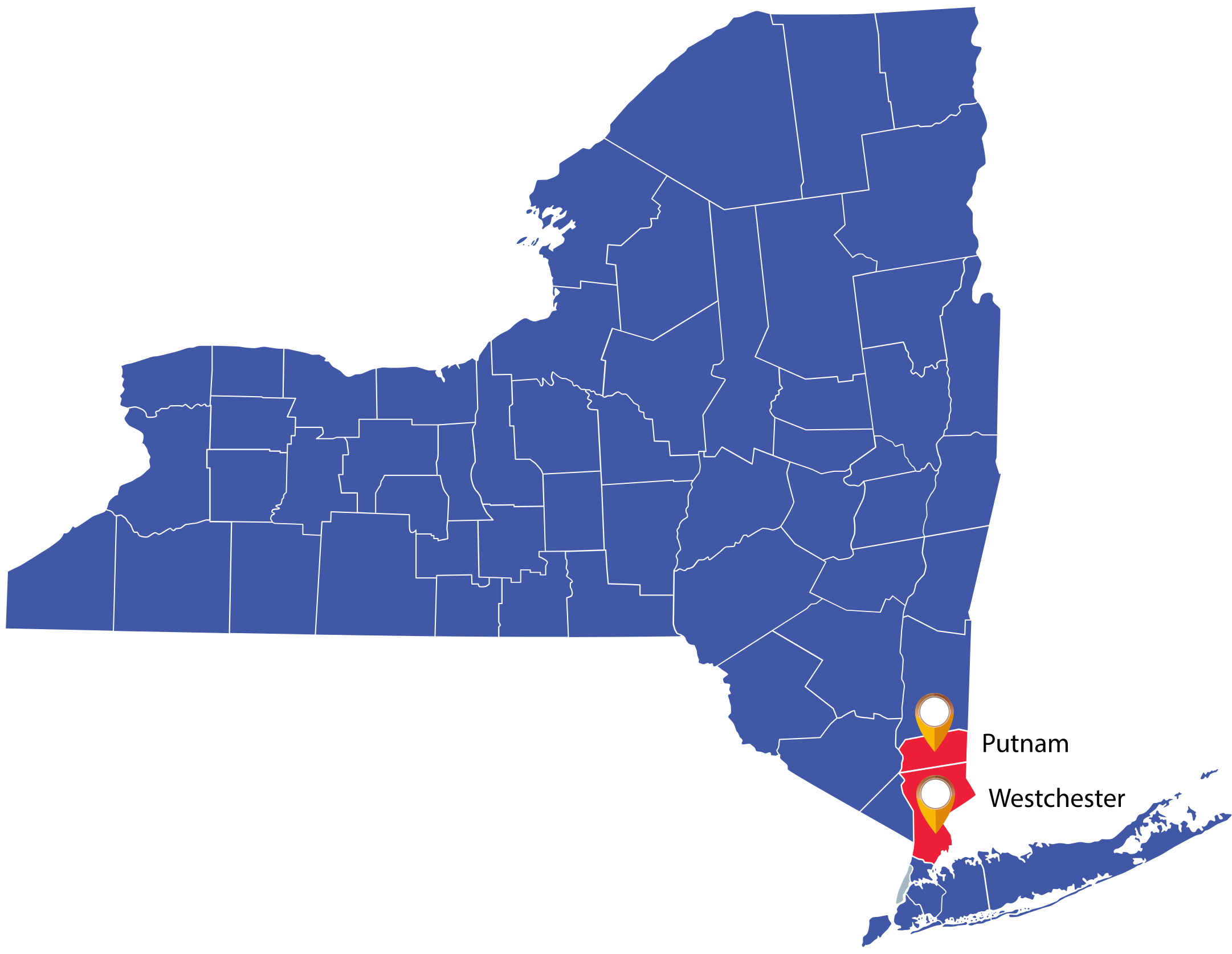
Bleakley Plumbing serves Katonah and nearby Westchester County communities with boiler replacement and new-system planning for hydronic, radiant, gas-fired, and oil-fired heating.
Serving Katonah And Nearby Westchester Communities
Katonah is connected to Somers, Bedford, Yorktown Heights, and other Northern Westchester areas where older homes and updated additions often rely on zoned hydronic heat.
- Katonah boiler installation for homeowners, property managers, and commercial properties
- Nearby project planning across Somers, Bedford, Yorktown Heights, and surrounding Westchester communities
- Installation experience with hydronic, radiant, gas-fired, and oil-fired heating systems
- Contact Bleakley Plumbing to discuss the property and confirm service availability
Boiler Installation Details That Change From One Katonah Property To The Next
The right equipment and piping plan depend on the building, the existing system, and the owner's goals. These factors should be resolved before a boiler is ordered.
Heating Load
Insulation, windows, air leakage, square footage, ceiling height, additions, and use patterns affect required output.
Existing Radiation
Baseboard length, radiator size, radiant tubing, and design water temperatures influence boiler selection and control strategy.
Fuel And Burner Type
Gas-fired and oil-fired equipment have different fuel-delivery, burner, venting, and maintenance requirements.
Venting Path
Chimney condition, sidewall options, combustion air, clearances, and condensate routing can limit equipment choices.
Zone Plan
The number and type of zones affect thermostats, valves, circulators, controls, flow, and minimum boiler output.
Water Chemistry
System water, oxygen entry, mineral content, and repeated makeup water can affect corrosion, scale, and component life.
Mechanical-Room Access
Doorways, stairs, finished spaces, drainage, working clearances, and future service access shape removal and installation.
Future Property Plans
Additions, remodels, indirect water heating, or new radiant areas should be considered before the final system is designed.
Boiler Installation Should Protect The Home From Removal Through Final Startup
Replacing a boiler can involve draining water, disconnecting fuel and venting, removing heavy equipment, modifying piping, and working around finished basements or utility rooms. The installation plan should protect the access path and contain the work area.
Bleakley Plumbing emphasizes professional, clean service and transparent communication. Property owners should understand what must be moved, which components will be reused, how long heat will be interrupted during active work, and what the finished system will include.
- Access paths planned around floors, stairs, walls, doors, storage, and finished rooms
- Controlled draining, disconnection, removal, and handling of the existing boiler and related components
- Clear explanation of new piping, pumps, valves, controls, venting, condensate, and service clearances
- Work area cleaned of removed parts, packaging, debris, and installation materials
- Final walkthrough covering controls, normal operation, maintenance, and post-installation questions
Choose A Katonah Boiler Installer Who Designs Around The House
A high-efficiency label does not guarantee a good installation. The boiler must be sized and integrated with the emitters, zones, controls, fuel, venting, drainage, and mechanical space. Bleakley Plumbing approaches installation as a complete heating-system project.
Installation Capabilities
- Replacement and new-boiler planning for residential and commercial properties
- Hydronic baseboard, radiator, and radiant-system integration
- High-efficiency boiler planning with compatible controls, venting, condensate, and return-water conditions
- Gas-fired and oil-fired equipment evaluation based on the fuel system and property
- Zone, circulator, valve, expansion, air-removal, and near-boiler piping coordination
What Katonah Customers Should Expect
- A thorough assessment of the building, existing boiler, heat distribution, comfort complaints, and future plans
- Clear explanation of equipment selection, components being reused, and required system changes
- Transparent discussion of cost factors without unsupported flat pricing or one-size-fits-all claims
- Professional protection of the access path, mechanical area, and finished spaces
- Direct contact with Bleakley Plumbing at 914-276-3756 for project planning
Helpful Bleakley Plumbing Pages For Katonah Boiler Installation
Review the approved company pages to understand Bleakley Plumbing's service scope or send information about your planned boiler project.
Start With Bleakley
Boiler Installation Resources
Frequently Asked Questions About Boiler Installation In Katonah, NY
These answers cover boiler sizing, system compatibility, efficiency, zoning, installation scope, and cost factors. An on-site evaluation is still required for a reliable recommendation.
What is included in a boiler installation evaluation?
The evaluation should review the building's heating demand, existing boiler, fuel, venting, piping, zones, emitters, controls, expansion components, drainage, mechanical-room access, and recent comfort or repair problems.
How should a new boiler be sized for a Katonah home?
Sizing should be based on the property's heating load and the distribution system, not automatically copied from the old boiler. Insulation, windows, air leakage, additions, emitters, and zone behavior all affect the decision.
Is a high-efficiency boiler always the best choice?
Not automatically. High-efficiency equipment can be a strong option when the heating load, return-water temperatures, venting, condensate route, controls, and distribution system support it. The installation details determine whether the efficiency potential is realized.
Can the existing radiators, baseboard, or radiant tubing be reused?
Often they can, but their condition, capacity, design water temperature, flow requirements, zoning, and compatibility with the new boiler must be evaluated. Some projects need control, pump, valve, or piping changes even when emitters remain.
Does Bleakley Plumbing install gas-fired and oil-fired boilers?
Yes. Bleakley Plumbing has experience with gas-fired and oil-fired heating systems. Equipment selection and installation are planned around the fuel supply, burner, venting, controls, piping, and service access present.
Can a new boiler improve uneven heating between zones?
It can be part of the solution, but uneven heat may also involve emitters, flow, balancing, circulators, zone valves, controls, air, or building heat loss. Those causes should be addressed in the design instead of expecting the new boiler alone to fix them.
How do I decide between boiler repair and replacement?
Compare the current failure, boiler condition, leak history, repair frequency, parts availability, efficiency, heat output, and future property plans. A serviceable isolated failure may justify repair; repeated major problems may justify installation.
How long does boiler installation take?
The schedule depends on equipment availability, removal difficulty, piping changes, fuel and venting work, zones, controls, access, and startup requirements. Bleakley Plumbing can outline the expected sequence after evaluating the property.
What affects the cost of boiler installation in Katonah?
Cost factors include boiler type and capacity, efficiency level, fuel, venting, condensate, near-boiler piping, pumps, valves, controls, zones, removal, access, and how much of the existing system can be reused.
How should I prepare the property for boiler installation?
Clear the path to the mechanical room, move stored items away from the work area, identify finished surfaces that need protection, and share information about prior repairs, comfort problems, fuel service, and planned renovations.
Planning Boiler Installation In Katonah, NY?
Call Bleakley Plumbing to evaluate the existing heating system, building load, zones, fuel, venting, and mechanical-room conditions before selecting a replacement or new boiler. The right plan should improve reliability without creating new circulation or control problems.